Bio Super Phosphate (BSP): A Sri Lankan Patented Innovation Transforming Phosphorus Use in Agriculture
Dr. Thulitha Ranwala - Postgraduate Registrar in Orthopedic Surgery Entrepreneur & Researcher in Sustainable Agricultural Technologies
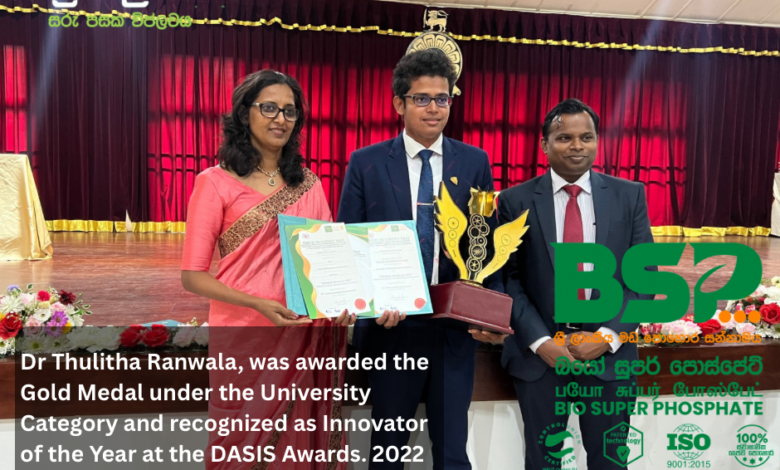
Sri Lanka’s agricultural sector is undergoing a necessary transformation, driven by the urgent need to improve nutrient efficiency, reduce dependence on imported fertilizers, and restore soil health (FAO, 2023). Within this transition, locally developed innovations have begun to demonstrate their potential to reshape conventional farming practices.
One such innovation is Bio Super Phosphate (BSP), also known as Rhizosara, a patented phosphorus fertilizer developed by Sassrika Lanka (Pvt) Ltd based on Eppawala rock phosphate. This product represents a shift from purely chemical nutrient supply towards biologically enhanced nutrient efficiency.
FROM RESEARCH TO MANUFACTURING
The development of BSP originates from long-term research conducted by the Biogenic Green Technology Research Institute, which has focused on sustainable agricultural inputs for over a decade. These technologies are transferred to Sassrika Lanka for manufacturing under controlled conditions.
The company operates an ISO 9001:2015-certified manufacturing facility, ensuring process consistency and quality control. In addition, Control Union certification further validates compliance with environmentally responsible agricultural input standards.
BSP was granted the patent (Patent No. 21471), and the innovation was recognized nationally with the Best Innovation Award—Gold Medal under the university category at the Sri Lanka Inventors Commission and DASIS Award 2022, highlighting both its scientific and practical significance.
SCIENTIFIC BASIS OF BSP
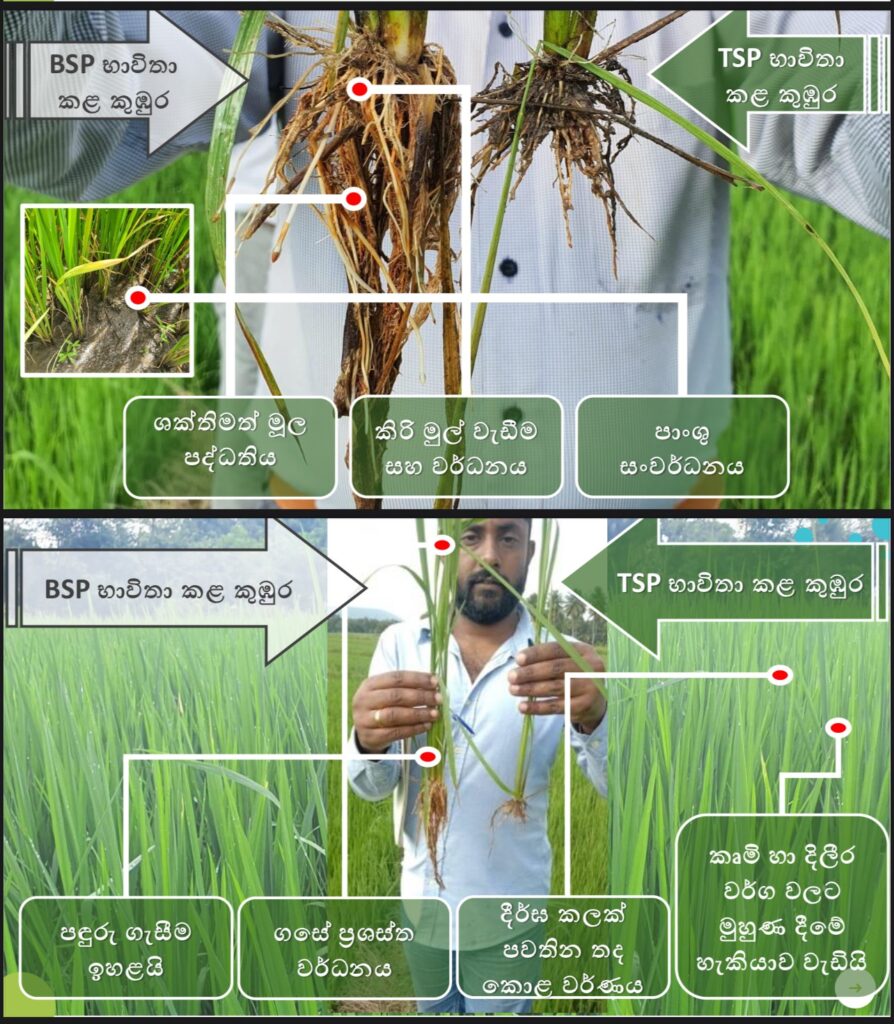
Unlike conventional Triple Super Phosphate (TSP), BSP functions through a dual mechanism:
- Controlled phosphorus release through granular formulation, ensuring sustained nutrient availability
- Biological solubilization through live phosphorus-solubilizing microorganisms that convert soil-bound phosphorus into plant-available forms
This combined mechanism improves phosphorus use efficiency, which is particularly important in tropical agricultural soils where phosphorus fixation is high (Kucey, 1983; Asea et al., 1988).
The BSP manufacturing process utilizes biological activation of locally available Eppawala rock phosphate instead of acid-based chemical digestion methods commonly used in conventional phosphate fertilizer manufacturing. This approach aims to improve nutrient availability while reducing environmental burden associated with highly acidic industrial processing.
FIELD VALIDATION THROUGH FARMER ENGAGEMENT
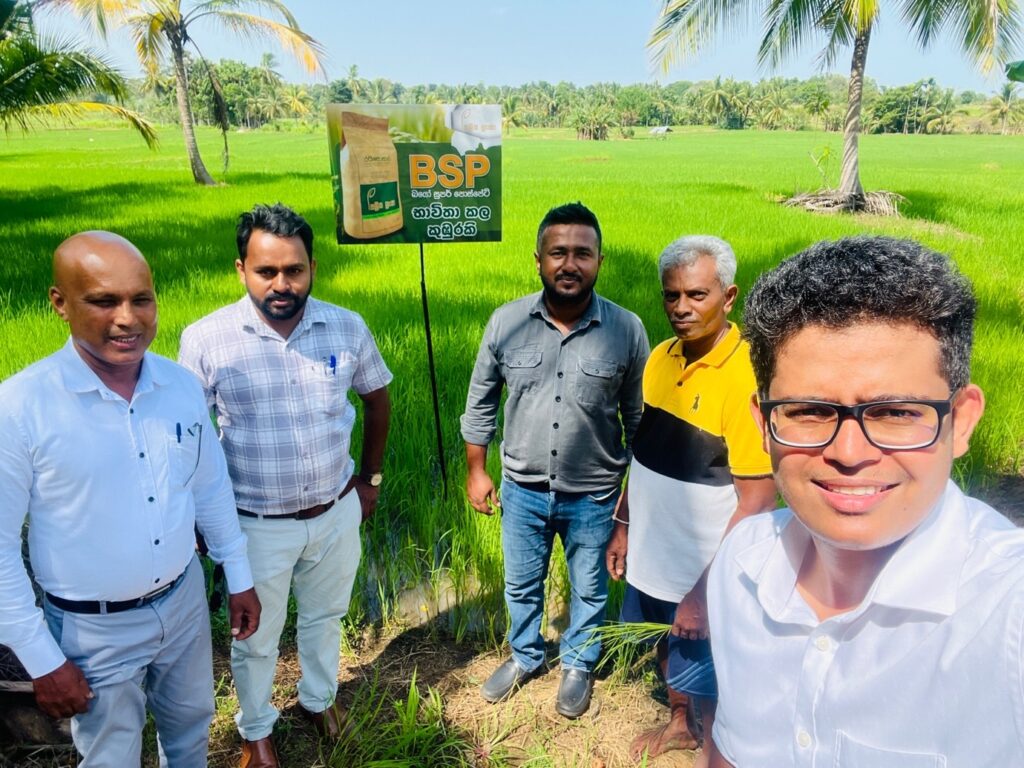
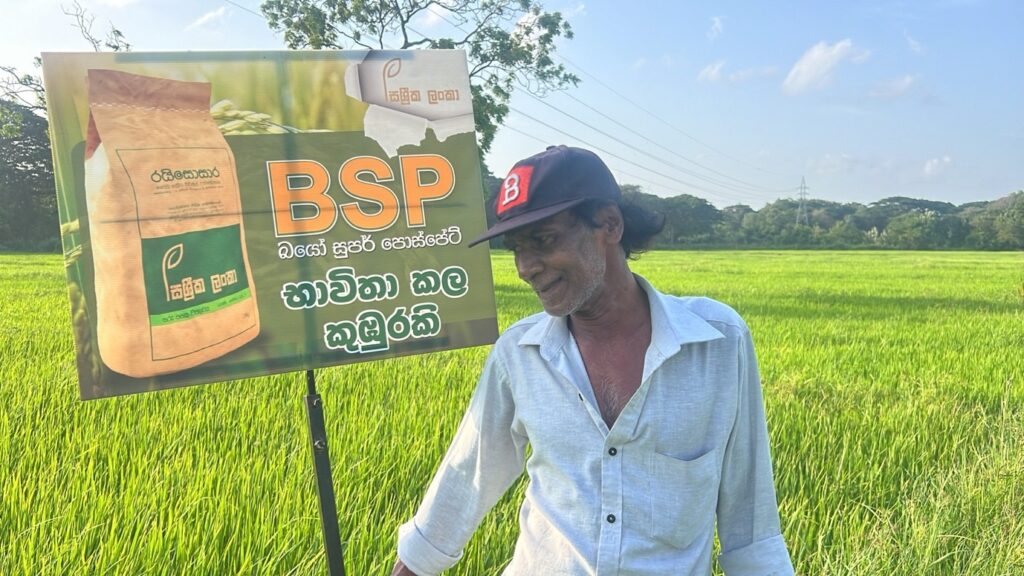
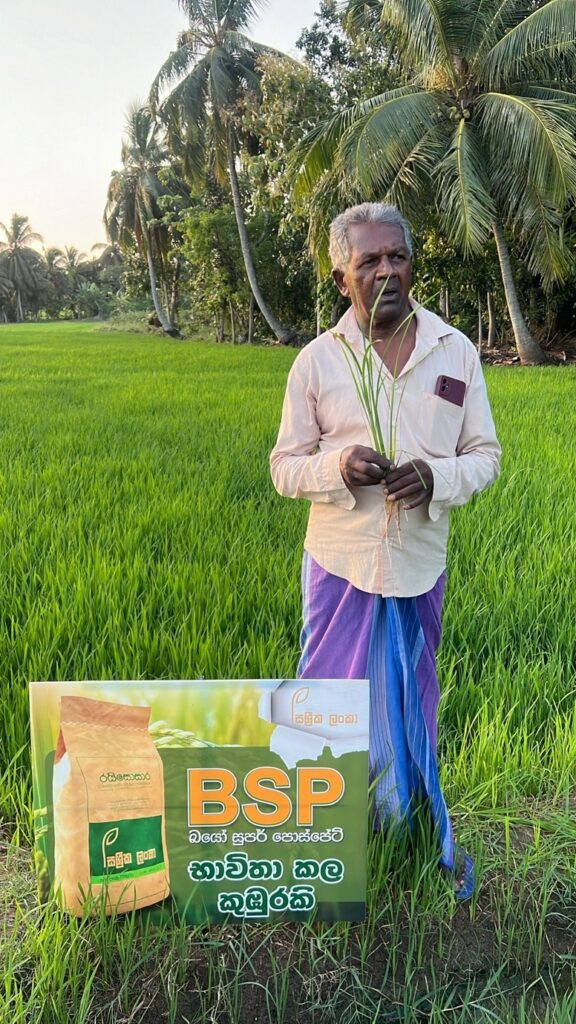
A defining strength of BSP is its continuous validation under real farmer field conditions rather than isolated laboratory testing alone.
Since 2021, Sassrika Lanka, together with the Market Development Facility (MDF) supported by the Australian High Commission, has implemented structured farmer engagement and demonstration programs in the Eastern Province and other agricultural regions. These activities included:
- Establishment of demonstration plots in Ampara District
- Large-scale farmer awareness programs
- Direct farmer engagement through extension networks
- Seasonal digital outreach campaigns and farmer testimonials
Independent observations from MDF-supported farmer programs indicated encouraging outcomes (MDF Sri Lanka, 2024):
- Approximately 85 percent of farmers reported yield increases
- Average yield improvement was around 20–22 percent
- Phosphorus fertilizer usage was reduced by approximately 40 percent
These findings demonstrate both agronomic and economic potential under practical farming conditions.
GOVERNMENT-VALIDATED HARVEST ANALYSIS
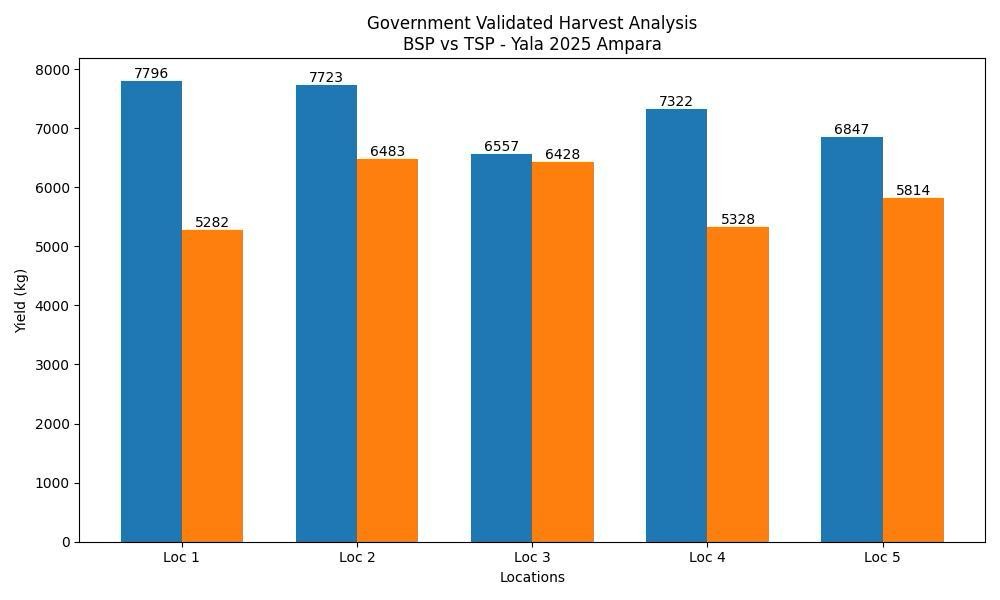
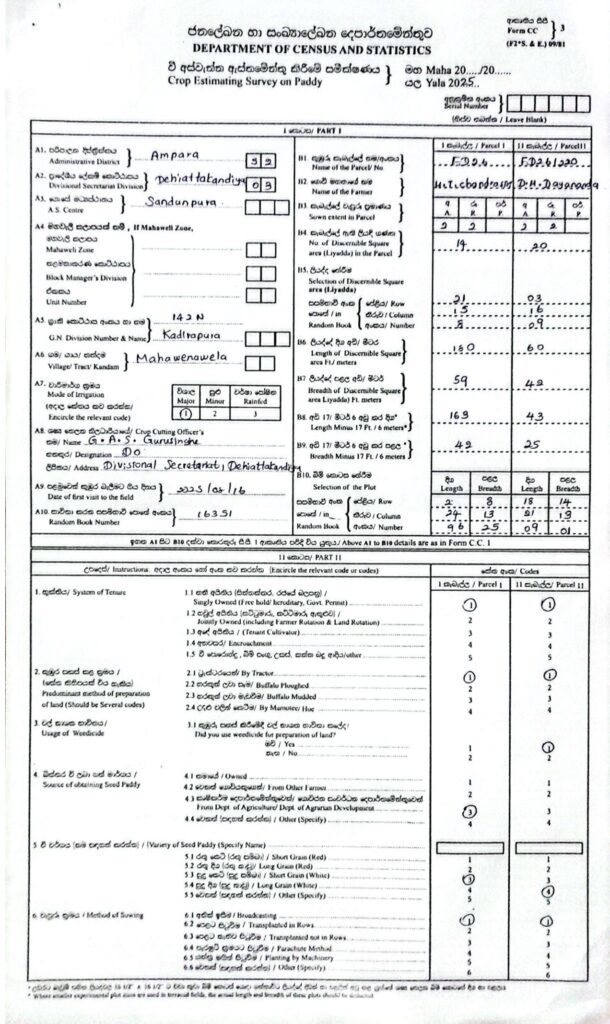
Further scientific validation was obtained through a crop-cutting-based harvest analysis conducted during the 2025 Yala season in the Dehiattakandiya Agrarian Service Division in Ampara District, utilizing methodologies aligned with the Department of Census and Statistics Sri Lanka crop-cutting procedures (Department of Census and Statistics Sri Lanka, 2025).
Study Design
The field assessment included:
- Five representative field locations
- Equal land extent of 2 acres and 2 roods per plot
- Comparable agronomic practices
- Similar application of other fertilizer inputs such as MOP
- Only one varying factor: phosphorus source (BSP vs TSP)
Key Findings
The analysis demonstrated:
- BSP outperformed TSP in all observed locations
- Average yield under BSP: 7247 kg
- Average yield under TSP: 5865 kg
- Average yield increase: approximately 24 percent
- Maximum observed increase: approximately 47 percent
These observations suggest both consistency and substantial performance improvement under field conditions.
FIELD-LEVEL OBSERVATIONS
Beyond yield improvement, farmers consistently reported:
- Stronger root systems with increased fine root development
- Improved nutrient absorption efficiency
- Better soil condition over time
- Reduced dependency on additional phosphorus fertilizer applications
Such observations are consistent with established scientific principles related to microbial phosphorus solubilization and rhizosphere enhancement (Asea et al., 1988).
BEYOND THE PRODUCT: A BEHAVIOURAL APPROACH
An important lesson from the BSP experience is that fertilizer innovation alone is insufficient without farmer awareness and trust-building.
The transition from conventional TSP usage towards BSP adoption required:
- Extensive farmer education programs
- Continuous field-level engagement
- Demonstration-based learning
- Peer-to-peer farmer communication
- Trust-building through visible field results
This approach highlights the importance of knowledge-driven adoption pathways in agricultural transformation.
NATIONAL SIGNIFICANCE
The implications of BSP extend beyond individual farm performance. Potential broader impacts include:
- Reduction in phosphorus fertilizer import dependency
- Increased utilization of locally available Eppawala phosphate resources
- Improved nutrient efficiency and cost-effectiveness
- Contribution towards climate-smart and sustainable agriculture
- Strengthening local agricultural innovation ecosystems
The integration of research, manufacturing, field validation, and farmer engagement positions BSP as an example of science-based local innovation within Sri Lanka’s agricultural sector.
CONCLUSION
Bio Super Phosphate represents a convergence of scientific innovation, field validation, and farmer-centered agricultural development.
The combination of:
- Patented technology
- National recognition and certification
- MDF-supported field programs
- Government-aligned crop-cutting validation data
provides an encouraging evidence base for its effectiveness and future potential.
As Sri Lanka moves towards more sustainable and resilient agricultural systems, scaling scientifically validated local solutions such as BSP may play an important role in improving long-term productivity, soil health, farmer profitability, and national food security. Further large-scale impact evaluations will help strengthen the scientific evidence base for broader adoption.

Dr. Thulitha Sihalindu Ranwala
MBBS (Colombo)
Postgraduate Registrar in Orthopaedic Surgery Entrepreneur & Researcher in Sustainable Agricultural Technologies
REFERENCES
- Asea, P.E.A., Kucey, R.M.N., & Stewart, J.W.B. (1988). Inorganic phosphate solubilization by two Penicillium species in solution culture and soil. Soil Biology and Biochemistry.
- Department of Census and Statistics Sri Lanka (2025). Crop Cutting Methodology and Yield Assessment Procedures.
- Food and Agriculture Organization (FAO) (2023). Soil Fertility and Phosphorus Management Guidelines.
- Kucey, R.M.N. (1983). Phosphate-solubilizing bacteria and fungi in various cultivated and virgin Alberta soils. Canadian Journal of Soil Science.
- Market Development Facility Sri Lanka (2024). Farmer Field Assessment on Bio Super Phosphate Adoption in Ampara District.
- Market Development Facility Sri Lanka (2025). Farmer Yield and Fertilizer Efficiency Assessment – Kurunegala District.
- Studies on Eppawala Rock Phosphate Utilization in Sri Lanka.