That “Accidental burn” which paved the way for the birth of radiation oncology.
Mr. Priyanga Rathnayaka,Deputy Director (Promotion), Sri Lanka Atomic Energy Board (SLAEB)
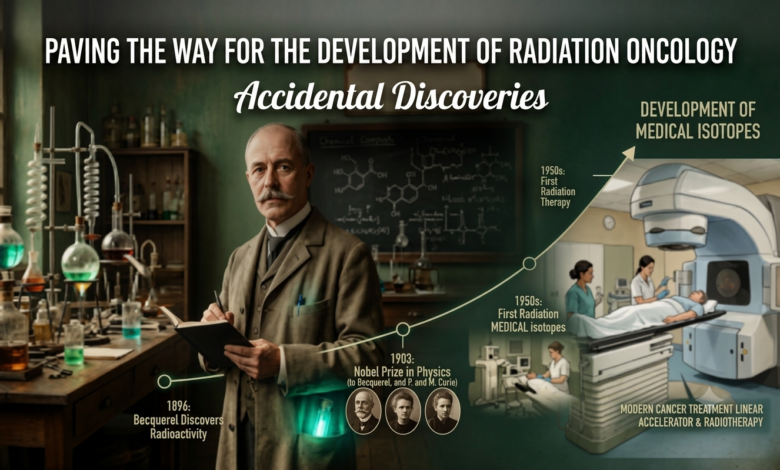
One day in April 1901, the French physicist Henri Becquerel was walking along the streets of Paris to a lecture hall. He was not even for a moment aware that a small glass tube in his coat pocket was affecting his biological tissues. Even though he had already created history five years earlier by discovering radioactivity the scientists of the day strongly believed that these invisible rays caused no harm to the body upon contact. however, a single permanent scar on his skin had succeeded in completely turning the future of human medicine upside down.
A six-hour error
In order to demonstrate the properties of radioactive elements to the audience attending his lecture , Becquerel had asked his closest colleagues, Marie and Pierre Curie, for a sample of radium salts of high concentration. He had placed the small glass tube in his coat pocket, where it rested against his chest for nearly six hours.Whilst he felt no heat, itching, or discomfort at that moment, those invisible rays were carrying out their destructive work amidst profound silence.
“Becquerel Burn” and the first evidence obtained for medical science
It took nearly two weeks for the effects of this invisible attack to emerge.
* The slight redness on his chest at first quickly turned into a severely painful ulcerating sore.
* Blisters had formed on the skin in the exact shape and location of the radium tube.
Surprised and worried, Becquerel met Ernest Besnier, a well-known dermatologist in Paris. There, they confirmed that this severe tissue damage was a direct result of the invisible rays emitted from the radium tube. Quickly known as “Becquerel Burn” in the scientific world, it was the first recorded instance in the world,where radiation had caused any damage to human skin. Thus, it was revealed to the world that radioactive rays possess enough power to mutate and violently destroy living human cells.
Pierre Curie’s daring experiment
As soon as this news reached Pierre Curie, he became deeply curious about the biological effects of the element he had helped discover.
Deciding to experiment with his own body, Pierre held a tube containing a radium sample tied to his arm for ten hours in a row. He meticulously documented the burn, skin peeling and the very slow healing process that followed for several weeks.
The birth of modern radiation oncology
Through these experiments, the Curies reached a groundbreaking conclusion:
“If radiation possesses the dangerous power to destroy healthy human tissues, couldn’t it be used as a weapon to destroy diseased tissue (cancer cells)?”
With this remarkable thought, radioactivity transformed from a mere physical phenomenon into a medical revolution.
Within a few years, the practice of inserting radium into the body to shrink malignant tumors started leading to the development of brachytherapy. This laid a strong foundation for the modern radiation oncology as we see it today.
That little glass tube that was forgotten in Henry Becquerel’s pocket was initially a painful mistake, but it managed to open the doors to a medical miracle that saves the lives of millions of cancer patients around the world today.

Mr. Priyanga Rathnayaka
Deputy Director (Promotion)
Sri Lanka Atomic Energy Board (SLAEB)