NASA’s High-Flying Mission to Solve the Great Solar Mystery: The Million-Degree Coronal Heating Problem
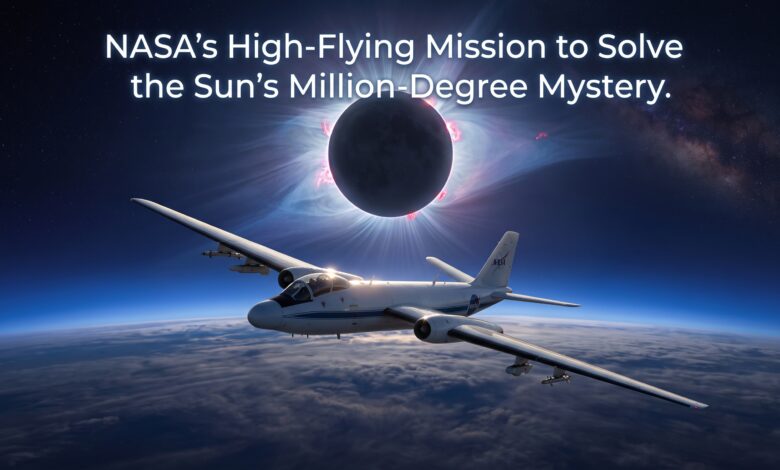
Normally in physics, if you step away from a heat source like a campfire, the air gets cooler. But with the Sun, the exact opposite happens. The Sun’s visible surface is around 6,000°C. However, its thin outer atmosphere (the corona) jumps to an astonishing 1 to 3 million degrees Celsius. It completely defies everyday logic.
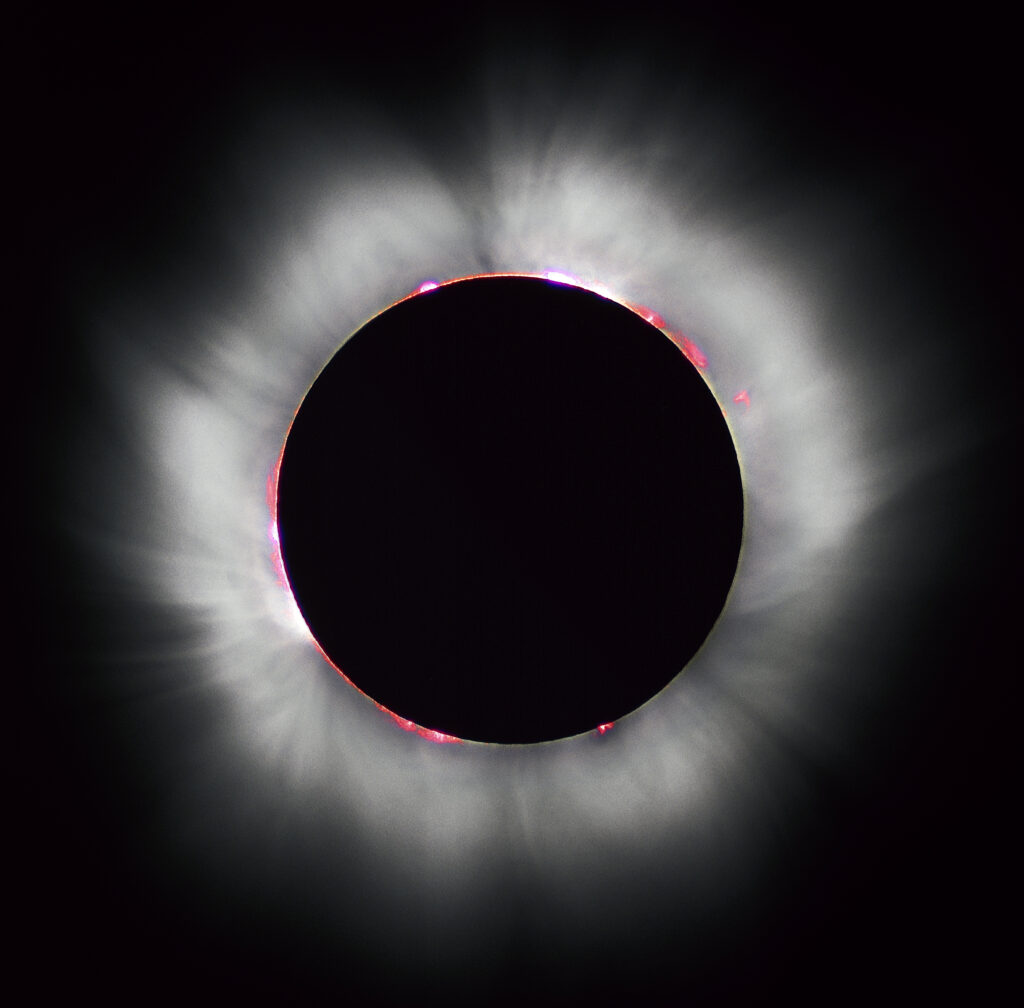
Because the Sun’s surface is blindingly bright, the faint, super-heated corona can only be observed clearly when the Moon blocks the main solar disk. By capturing rapid, high-resolution snapshots of the corona during the eclipse, scientists hope to catch the magnetic waves and mini-explosions responsible for this superheating.
NASA’s High-Flying Mission to Solve the Sun’s Million-Degree Mystery
On August 12, 2026, a total solar eclipse crossed over regions including Greenland, Iceland, and Spain. A total solar eclipse happens when the Moon perfectly aligns between the Earth and the Sun, temporarily blocking the Sun’s bright face. This rare event briefly turns day into night and reveals the Sun’s glowing outer atmosphere, known as the corona.
To study this incredible phenomenon, NASA and the Southwest Research Institute (SwRI) flew an advanced observatory high into the stratosphere.
Chasing the Shadow at 50,000 Feet
Watching an eclipse from the ground only gives scientists about two minutes of total darkness. To get more time, researchers used NASA’s WB-57 high-altitude research jet.
Flying at 50,000 feet and chasing the Moon’s shadow across the Atlantic Ocean at 460 miles per hour, the aircraft was able to stay in the darkness for nearly three full minutes. Flying this high provided two massive advantages:
- Avoiding the Weather: The jet flew entirely above the heavy weather and cloud cover that threatened to block the view for observers on the ground in Iceland.
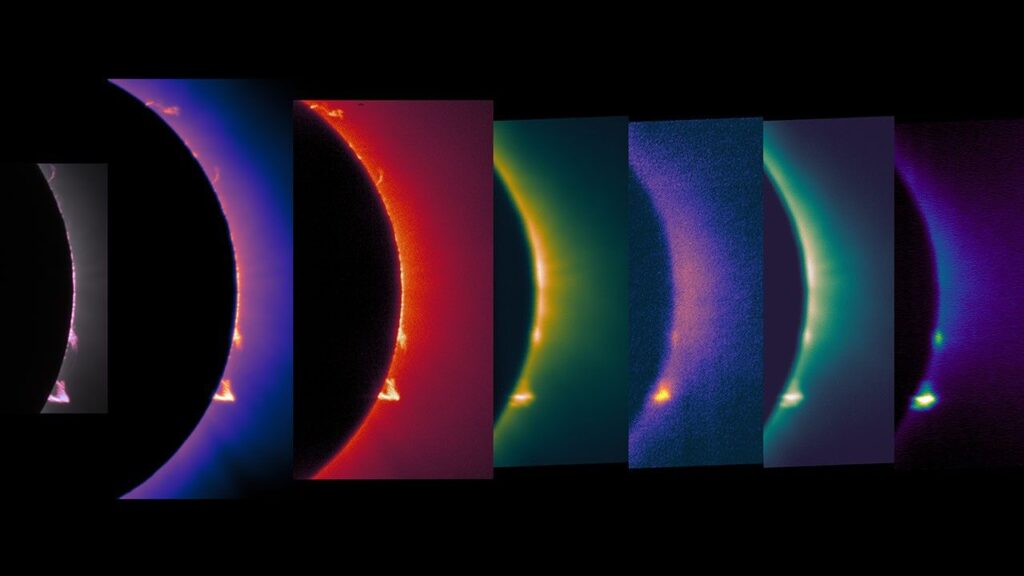
- Clearer Science: Flying above the thickest parts of Earth’s atmosphere allowed the jet’s specialized nose-mounted camera to capture clear images of infrared light that normally get absorbed by the atmosphere and cannot be seen from the ground.
Space Weather and Solar Eruptions
While looking for clues to the heating mystery, the high-speed cameras caught a massive “prominence” erupting from the edge of the Sun. Prominences are giant loops of extremely hot, magnetized plasma.
When the Sun releases these massive bursts of energy and particles, it creates “space weather.” If this energy reaches Earth, it can disrupt satellites, interfere with GPS navigation, and even damage electrical power grids. Understanding these eruptions helps us predict space weather to protect our modern technology.
References & Further Reading
-
NASA Science (2026, July 27). NASA Science Soars During August Total Solar Eclipse. National Aeronautics and Space Administration. Retrieved from https://science.nasa.gov/science-research/heliophysics/nasa-science-soars-during-august-total-solar-eclipse/
-
Southwest Research Institute (2026, August 14). Airborne observatory improves views of solar corona during cloud-covered eclipse. Phys.org. Retrieved from https://phys.org/news/2026-08-airborne-observatory-views-solar-corona.html